
Working-dog coaching
Living with a Working-Line Malinois or Dutch Shepherd in the North West
Plan useful daily training, play, exercise and rest for your Malinois or Dutch Shepherd, with coaching options on the Wirral and across the North West.
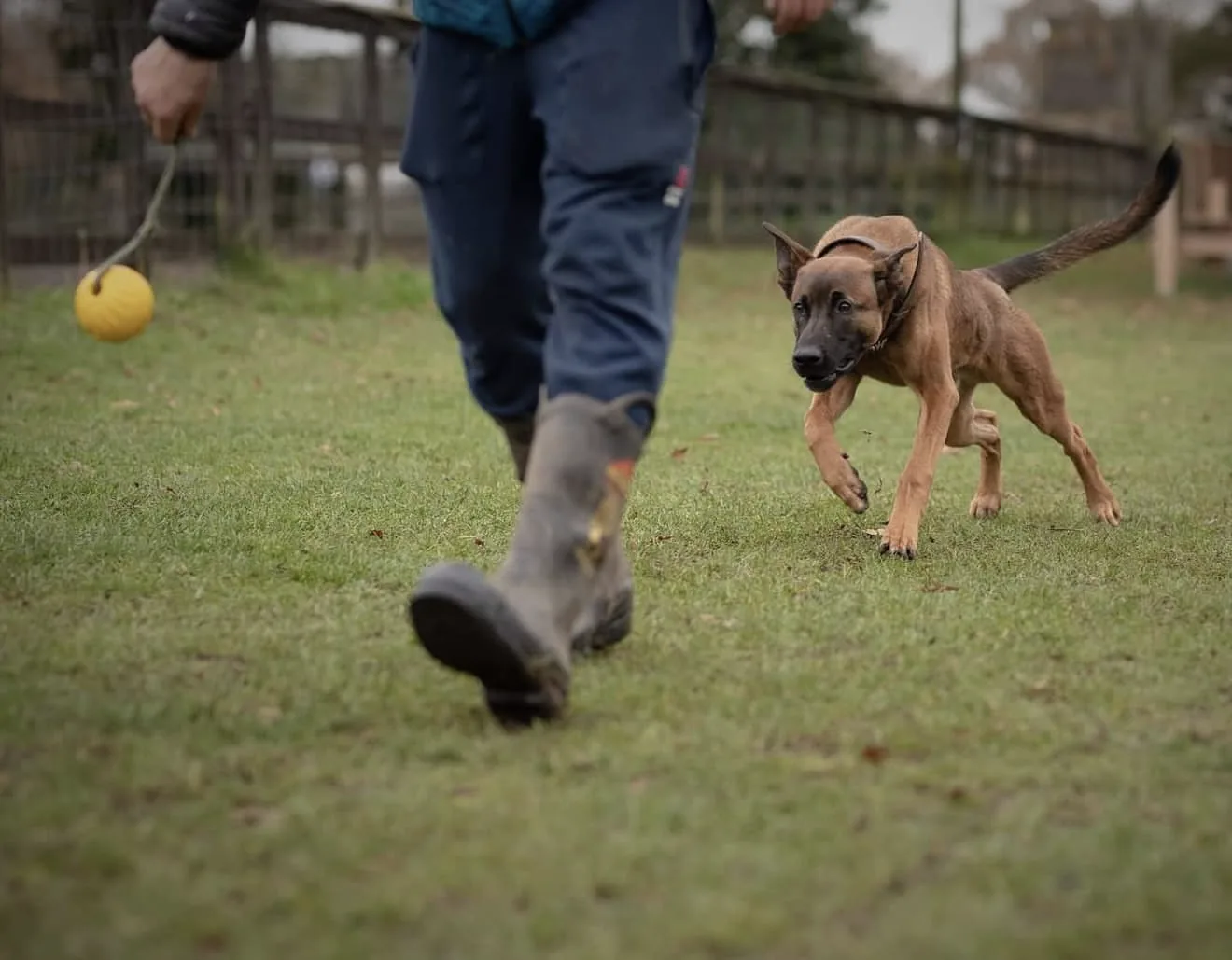
Start with the dog living in your house
If you are looking for a working-line Malinois trainer on the Wirral or Dutch Shepherd training in Cheshire, begin with the daily difficulties and skills you want to develop. Describe what happens on walks, during play and when the household settles.
Dogs Trust describes Malinois as typically energetic, while stressing that every dog has its own personality and experience.[1] A breed or working-line label cannot explain an individual's behaviour or establish suitability for sport or protection. For either breed, age, health, previous learning and the environment deserve attention. Enthusiasm for a toy does not settle those questions.
Plan activity alongside recovery
Keep appropriate physical exercise in the routine, with opportunities to sniff and explore. Add brief training and suitable play, then protect quiet periods. PDSA advises adapting exercise to age, health, fitness and personality, and building fitness gradually.[2] There is no universal daily mileage prescription here.
A longer walk may meet part of your dog's needs, but distance alone does not teach loose-lead walking, recall or settling. Give your dog a comfortable, quiet resting place with water where people will leave them undisturbed. Dogs Trust includes daytime rest and overnight sleep in a balanced routine.[5] A trained stay on a bed is not a substitute for sleep.
Make a short session easy to understand
Choose one useful objective: a few loose-lead steps, returning when called in a secure space, or calmly going to a mat. Begin somewhere quiet. Dogs Trust recommends short sessions focused on one behaviour, with simpler work when the dog struggles.[4] Finish before either participant becomes tired or frustrated.
Use a safe reward your dog values. If you have taught a marker word, say it at the successful moment and follow it with the promised reward.[3] Avoid asking for several extra behaviours before paying for the one you marked.
- Before starting: choose the behaviour, reward and safe location.
- During practice: note what the dog actually does and simplify if needed.
- Afterwards: record the setting, any distraction and how readily the dog rested.
For deeper technical detail, use the guides to advanced obedience and understanding versus anticipation.
Use play to practise shared skills
A suitable toy game can reward a response and provide enjoyable interaction. Practise comfortable exchanges and a reward-based release separately before expecting them during exciting play.[3] Keep games on secure, non-slip ground and check toys for damage or swallowing hazards.[2]
Tug may suit your dog, but it does not guarantee calmness afterwards or 'drain mental energy'. Watch whether your dog can pause, release comfortably and recover. If play becomes frantic, shorten it and review the setup. Do not prise a guarded toy away or provoke a reaction to test control; seek appropriate help.
Choose workable distances outdoors
On a busy Liverpool pavement, Wirral path or Cheshire countryside walk, leave enough space for your dog to notice a distraction without being pushed into an encounter. There is no fixed distance that suits every dog. If your dog becomes tense, fixates or cannot respond to an easy familiar cue, move farther away or leave calmly.[2]
Use a securely fitted lead setup you can manage, especially near roads and livestock. Practise recall in secure surroundings before relying on it in open spaces.[2] Wet ground, other path users and limited daylight should influence the session. A crowded walking route need not become today's training venue.
Recognise when behaviour help is needed
Persistent reactivity, fear or aggression needs individual assessment, not an assumption that your dog needs harder work. Speak to your vet and seek an appropriately qualified clinical animal behaviourist; a sudden behaviour change warrants prompt veterinary advice because illness or pain may be involved.[6] Meanwhile, avoid risky encounters and protect people and animals with suitable separation and lead management.
Defensiveness or reactivity must not be redirected into bite or protection work. ADVK9's performance, sport and advanced-obedience coaching, and protection coaching for suitable teams, are distinct from household-management needs that may require separate behaviour support. No training package guarantees safety or cures aggression.
Choose coaching around the actual goal
ADVK9 Working Dogs coaches handlers with their existing dogs, rather than selling dogs. Based on the Wirral, it coaches handlers from Liverpool, Merseyside, Chester and Cheshire. The £75 Sport Dog Kickstarter covers sport and personal/family protection goals and is recommended, not compulsory.
For a specific training issue or obedience skill, one-off 1:1 coaching costs £60 for one hour, with further sessions booked as needed. It is not an aggression treatment. The £399-per-calendar-month programme provides weekly one-hour coaching, a daily plan and WhatsApp support 9am–5pm Monday–Friday. Apply for monthly 1:1 coaching.
ADVK9 PSA is sport-only, Saturdays 1–4pm: £50 per session or £150 per calendar month, with two rounds, one obedience and one protection. Participation depends on suitability, readiness and club rules; membership is reviewed monthly. Ongoing personal/family protection stays in 1:1 only.
The existing route-choice guide explains the formats. For an individual starting-point discussion, send an enquiry describing your dog, daily routine and goal.
Sources and further reading
- [1]Dogs Trust: Belgian Malinois — individual needs, exercise and training
- [2]PDSA: Exercising your dog — individual needs, play safety and behaviour
- [3]Dogs Trust: Positive reinforcement — training with rewards
- [4]Dogs Trust: Top 10 dog training tips
- [5]Dogs Trust: Helping a hyper or restless dog to calm down
- [6]RSPCA: How to help your dog behave well — veterinary and behaviour referral