
PSA dog sport
What does a decoy do in PSA dog sport?
Understand a PSA decoy's role, dog readiness and supervised learning, with practical questions for handlers and enquiries about decoy work at ADVK9.
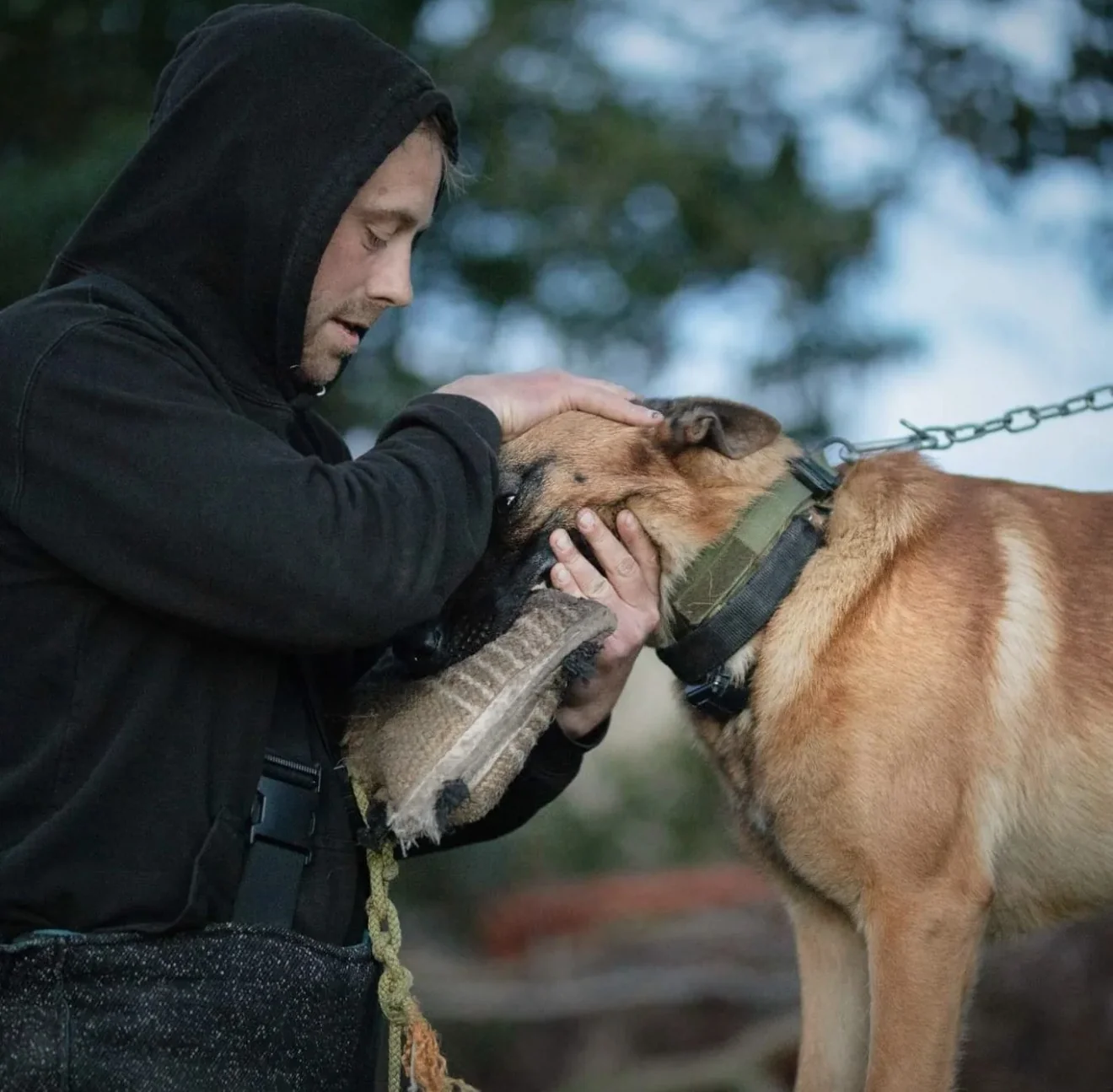
The decoy's role in the sport
In PSA dog sport, a decoy is the person working with the dog during prescribed protection exercises. At a sanctioned trial, the certified decoy is an event official who follows the judge's instructions and provides consistent presentations so competing dog-and-handler teams can be evaluated fairly. The judge scores the team; the decoy does not.[2]
PSA stands for Protection Sports Association. Its purpose is civilian competition in obedience and controlled protection. Suited decoys also appear during competition obedience, so their role includes providing distractions while the dog remains responsive to the handler.[1] For the wider sport context, read the PSA guide for handlers.
That official trial role is different from developmental training. In a coached session, the useful question is what this particular dog-and-handler team needs to learn now. Reproducing the difficulty seen in a competition clip is not a sensible starting point.
Reading the dog before asking for more
For handlers, understanding decoy work begins with observation. Look beyond whether a dog appears enthusiastic. Ask the coach what they are noticing about the dog's movement, attention, comfort and responses to the handler. A useful explanation connects those observations to the aim of the session, rather than judging the work only by its intensity.
Dogs Trust advises reading the whole body and the surrounding context, rather than treating one signal as a complete explanation. It also notes that frantic behaviour can be mistaken for excitement, and that changes in body language may reflect pain or medical problems.[3] Those principles matter when watching demanding sport work too; they are general welfare guidance, not a PSA assessment checklist.
If the dog shows discomfort or an unexplained change, the responsible conversation is about stopping and understanding the cause. It should not become a challenge to prove that the dog can tolerate more. Health concerns belong with a vet.
Pressure should follow readiness
PSA includes pressure from decoys and environmental distractions, with demands increasing through the sport.[1] That describes competition. It does not tell you how much difficulty an individual dog should face in today's training session.
At ADVK9, work is adapted to the dog's age, experience and readiness. Not every dog is suitable, and a protection round does not automatically mean bite work.[5] Communication, engagement or obedience may need attention first. Ask what the current objective is, why it is appropriate and what would make the team simplify or stop.
The same principle applies to someone learning decoy work. Your enthusiasm does not establish practical readiness. The supervisor needs to explain the scope before participation is considered, with room to remain an observer or decline an activity.
The handler remains part of the team
A useful training discussion includes the handler, decoy and person directing the session. Before work begins, ask who is responsible for each part, how instructions will be communicated and who can call a halt. Clear roles are worth discussing even when the people involved have worked together before.
Give an honest account of your dog's experience, known health limitations and difficulties around people or other dogs. Ask for feedback on your own communication as well as the dog's performance. Afterwards, check what has actually been agreed for practice. Do not recruit a friend to act as a decoy or recreate protection scenarios at home.
Choose supervised learning carefully
PSA requires trial decoys to demonstrate routine knowledge, technical proficiency, physical capability and safe performance. Its official explanation identifies suits and sleeves as specialised protective sporting equipment.[2] Wearing that equipment alone does not establish someone's competence.
PSA's new-club roadmap recommends learning from experienced judges, competitors and decoys, establishing trial decoys through certification camps and continuing education through training events and seminars.[4] Local learning or experience should not be confused with official PSA certification.
Before agreeing to participate, ask a few direct questions:
- Who will supervise, and what relevant experience can they explain?
- Is this observation, introductory learning, club support or an official certification event?
- How are participant readiness, dog suitability and protective equipment considered?
- What are the stopping arrangements, and can I remain an observer?
Look for clear answers and realistic limits. A video or article can help you understand the role, but neither can assess your readiness or provide practical supervision.
Discuss the right starting point
If you want to learn about or experience decoy work, use the decoy services enquiry page or contact ADVK9. Describe your experience, whether you want to observe or explore supervised participation, and whether the enquiry is for you or a club. Decoy workshops, seminars and club or group support are available by enquiry; arrangements need discussion, and participation is not automatic.
If your main aim is training your own dog, the Sport Dog Kickstarter is the recommended starting session for new or uncertain handlers, not a decoy qualification.[6] For ongoing sport coaching, explore ADVK9 PSA club. That group is sport-only; personal and family protection coaching is a separate private route.[5]
Sources and further reading
- [1]Protection Sports Association: official sport overview and decoy responsibilities
- [2]PSA: certified decoy role and protective sporting equipment explanation
- [3]Dogs Trust: understanding body language, context and signs of discomfort
- [4]Protection Sports Association: new-club roadmap and continuing education
- [5]ADVK9 PSA club: readiness, adapted work and sport-only scope
- [6]ADVK9 Sport Dog Kickstarter: assessment, foundations and recommended starting route